A Guide to Push-Pull Welding vs. Standard MIG
If you’ve ever wrestled with “bird-nesting” while trying to weld aluminum, you know that standard MIG welding has its limits. In the world of fabrication, wire delivery is everything. Whether you are a hobbyist looking to level up or a professional shop manager optimizing production, understanding the difference between Standard MIG (Push) and Push-Pull systems is a game-changer.
What is Standard MIG (Push) Welding?
In a standard MIG (Metal Inert Gas) setup, the wire feeder is located inside the welding machine. It uses a set of drive rolls to push the welding wire through a liner and out the torch.
- Best for: Steel and Stainless Steel.
- The Constraint: This system works perfectly for rigid wires. However, because you are pushing a soft or thin wire through a flexible cable (often 3 to 5 meters long), the wire can kink or bunch up—known as “bird-nesting”—if there is even slight resistance.
What is Push-Pull Welding?
Push-pull welding is a specialized system designed to solve these feeding issues. It utilizes two sets of synchronized motors:
- The Pusher: Located in the power source (like a standard MIG).
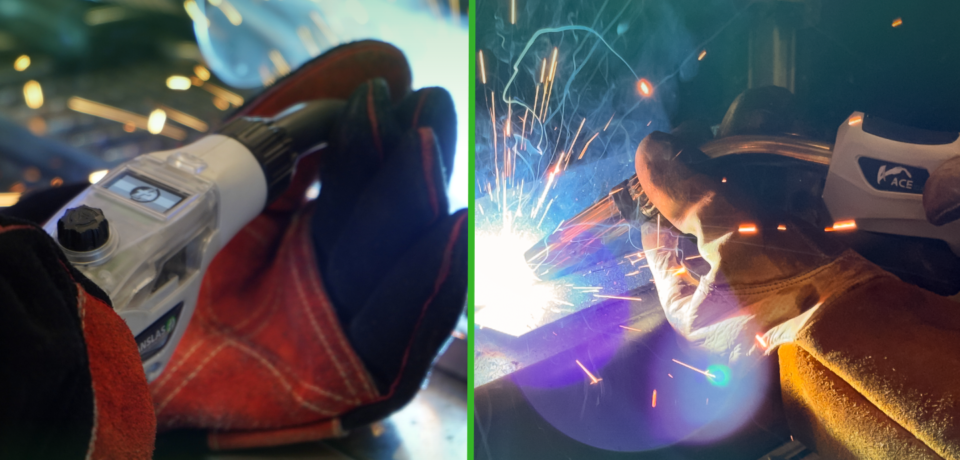
- The Puller: Located directly in the handle of the welding torch.
By having a motor at the torch end, the system maintains constant tension on the wire. The “push” motor provides the bulk of the force, while the “pull” motor ensures the wire stays taut and feeds at a perfectly consistent rate.
Featured Solution: The Translas Maestro
When it comes to professional-grade push-pull technology, the Maestro Push-Pull Torch from Translas is a standout choice. Unlike bulky, traditional push-pull guns, the Maestro is designed with a focus on ergonomics and durability. It offers:
- Extended Reach: Effortless feeding even with cable lengths up to 16 meters.
- Plug-and-Play Compatibility: It interfaces seamlessly with most modern power sources.
- Superior Cooling: Available in both air-cooled and water-cooled versions to handle high-duty cycles on thick aluminum plates.
Key Comparisons: Push-Pull vs. Regular MIG
| Feature | Standard MIG (Push) | Push-Pull (e.g., Maestro) |
| Primary Wire Type | Steel, Stainless Steel | Aluminum, Silicone Bronze, Thin alloys |
| Feeding Reliability | Low for soft alloys | Extremely High (Zero “bird-nesting”) |
| Cable Length | Limited (Max 4–5 meters) | Extended (Up to 12+ meters) |
| Equipment Cost | Budget-friendly / Standard | Professional investment |
| User Fatigue | Lightweight | Balanced (Maestro focuses on low weight) |
Why the Switch Matters: The Aluminum Factor
The biggest reason to move to a push-pull system is Aluminum. Aluminum wire is significantly softer than steel. In a standard “push” setup, the friction inside the liner often causes the wire to buckle before it reaches the contact tip.
With a push-pull system, you can use thinner aluminum wires (like 0.8 mm or 1.0 mm) over much longer distances. This is crucial for large-scale projects like boat building, trailer repair, or structural aluminum work where the welder needs to move freely around a large workpiece.
Technical Benefits for Your Workshop
- Consistency: The synchronized motors prevent wire slippage, leading to a more stable arc and cleaner beads.
- Versatility: You can work far away from the power source without dragging the machine behind you.
- Reduced Waste: Fewer jams mean less wasted wire and significantly less downtime spent clearing out drive rolls.
Conclusion
While regular MIG welding is the workhorse of the industry, push-pull welding is the precision tool that makes difficult jobs easy. By eliminating friction issues and providing a smooth, consistent feed, it pays for itself in saved time and frustration—especially when working with soft alloys.